
Projects
Projects
Here are example projects and stories that have been published by members of our community.


MAESSTRO: Masked Autoencoders for Sea Surface Temperature Reconstruction under Occlusion (Goh et al., 2024)
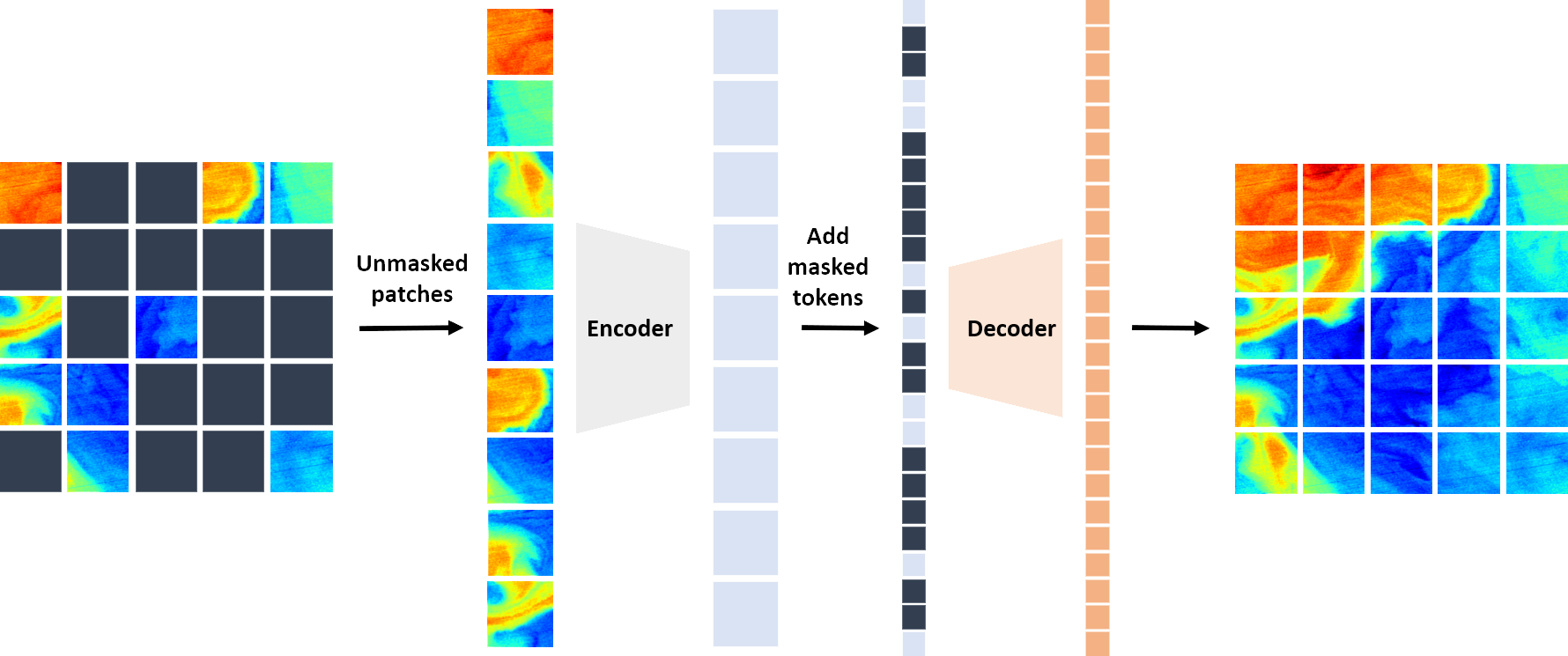
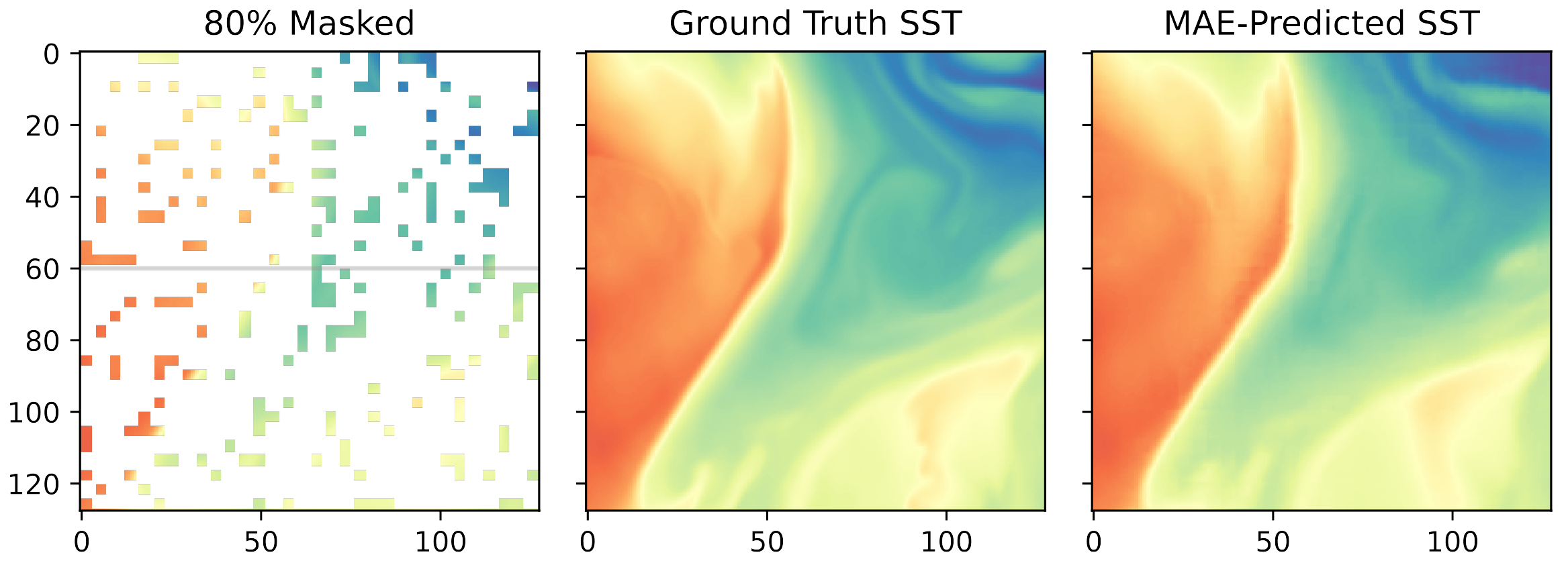
This study investigates the use of a masked autoencoder (MAE) to address the challenge of filling gaps in high-resolution (1 km) sea surface temperature (SST) fields caused by cloud cover, which often result in gaps in the SST data and/or blurry imagery in blended SST products. Our study demonstrates that MAE, a deep learning model, can efficiently learn the anisotropic nature of small-scale ocean fronts from numerical simulations and reconstruct the artificially masked SST images. The ability to reconstruct high-resolution SST fields under cloud cover has important implications for understanding and predicting global and regional climates and detecting small-scale SST fronts that play a crucial role in the exchange of heat, carbon, and nutrients between the ocean surface and deeper layers. Our findings highlight the potential of deep learning models such as MAE to improve the accuracy and resolution of SST data at kilometer scales. This presents a promising avenue for future research in the field of small-scale ocean remote sensing analyses.

Deep Learning Improves Global Satellite Observations of Ocean Eddy Dynamics (Martin et al., 2024)
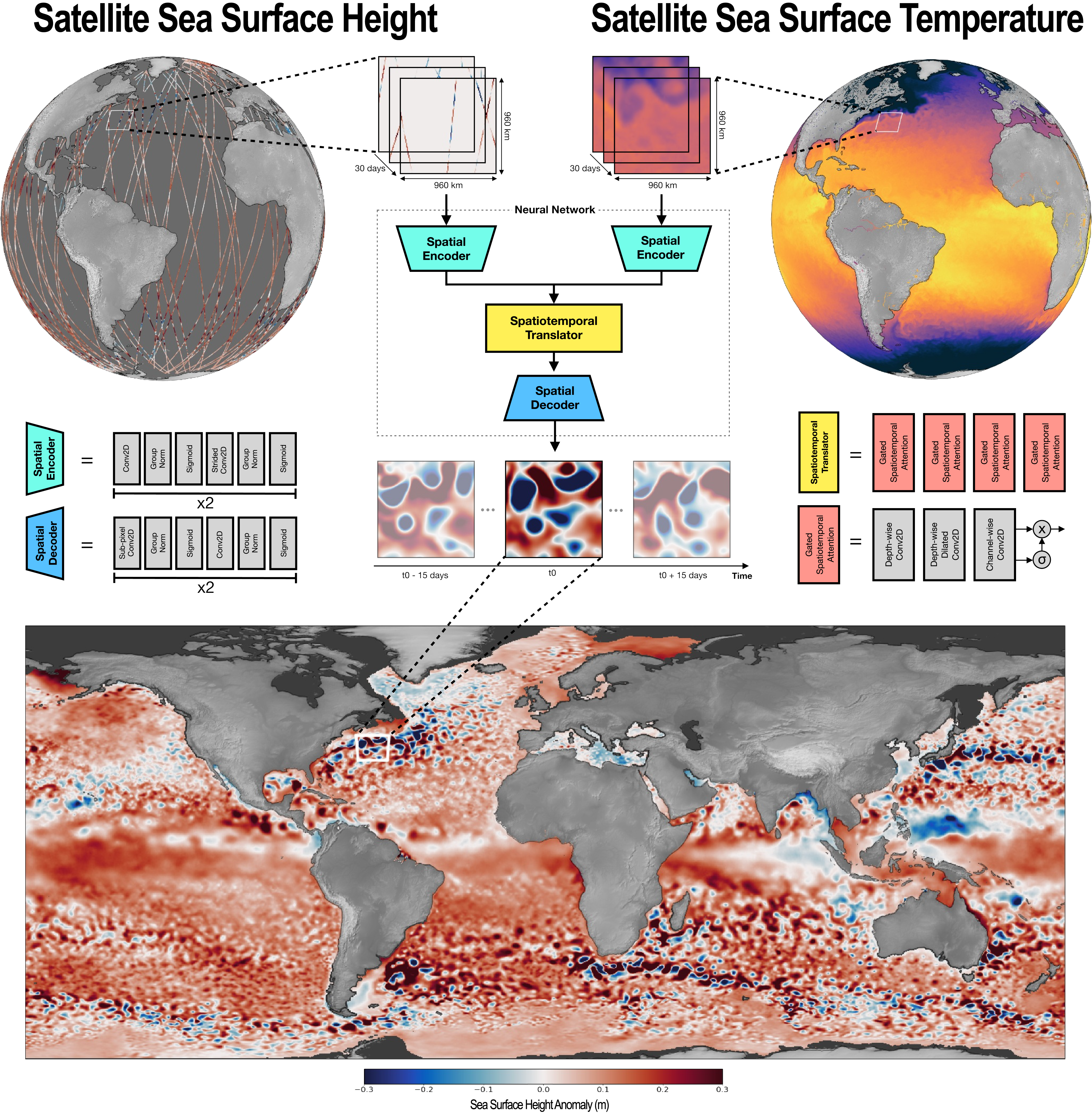
We developed a deep learning method to estimate global maps of surface ocean currents from satellite observations with significantly improved resolution and accuracy compared to existing methods. By synthesizing multi‐modal satellite observations of sea surface height and temperature, we achieve up to a 30% improvement in spatial resolution over the community‐standard sea surface height product. These new maps dramatically improve our ability to observe eddy dynamics and the impact of eddies on the transfer of energy between scales in the ocean. Our study suggests that deep learning can be a powerful paradigm for satellite oceanography.